
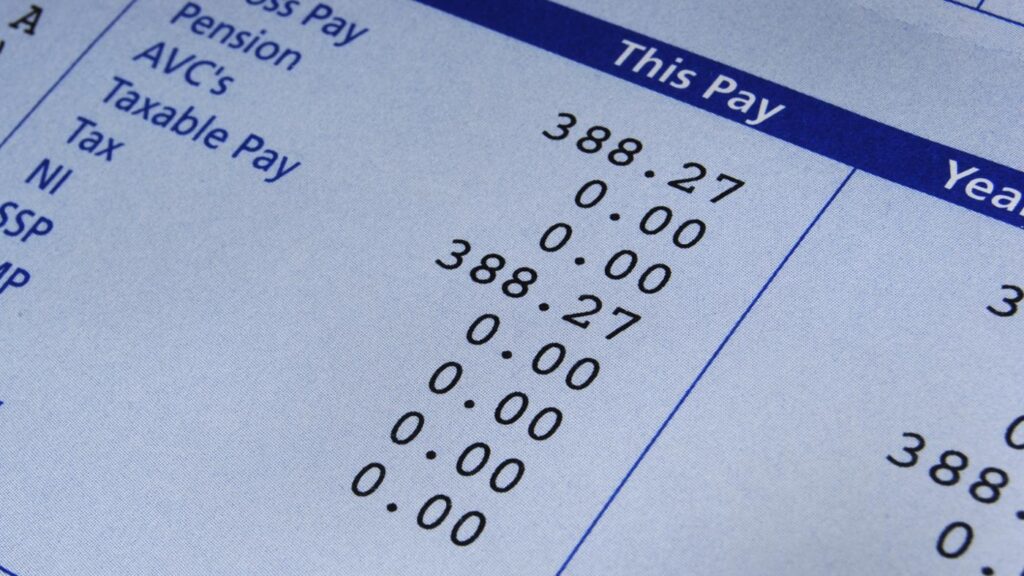
A paycheck is a check that an employee is given as payment for services rendered. The employee then cashes the check to receive the money. The employee also could elect to have the paycheck directly deposited into their bank account, so their pay shows up automatically on payday.
Furthermore, How do pay periods work?
A pay period is a time frame used to calculate earned wages and determine when employees receive their paychecks. Pay periods are fixed and most often recurring on a weekly, bi-weekly, semi-monthly or monthly basis. It’s important to remember that the pay period is different from a workweek.
Then, Why is my first paycheck so small? While it’s possible that you began working for a company on the first day of a pay period, this scenario is also uncommon. This means that your paycheck is likely less than what you can expect for future paychecks, since you may not have been working for the employer during the first few days of the pay period.
What should I do with my first paycheck as a teen? “Pay yourself first” is an important savings principle to teach kids. When “paying yourself first” start by saving 10-20% of net income. Most employers allow for a fixed percentage direct deposit to one account before depositing the remaining balance in another account—typically a checking account for everyday use.
Therefore, How long is a pay period? Therefore, the most common pay period length is two weeks or 10 business days. Pay periods can also occur on a weekly, semimonthly, or monthly basis.
How much do KFC employees get paid?
Kentucky Fried Chicken (KFC) Corporation Jobs by Hourly Rate
| Job Title | Range | Average |
|---|---|---|
| Job Title: Cashier | Range:R16 – R32 | Average:R22 |
| Cook, Restaurant | Range:R14 – R43 (Estimated *) | Average:R23 |
| General Manager, Restaurant | Range:R24 – R193 (Estimated *) | Average:R67 |
| Restaurant Manager | Range:R28 – R110 (Estimated *) | Average:R55 |
• Apr 6, 2022
How do I calculate my first paycheck?
To calculate a paycheck start with the annual salary amount and divide by the number of pay periods in the year. This number is the gross pay per pay period. Subtract any deductions and payroll taxes from the gross pay to get net pay.
Do you get paid more weekly or biweekly?
The U.S. Bureau of Labor Statistics reports that 43% of employers offer biweekly pay while 33% pay weekly. That doesn’t mean 43% of Americans get paid every two weeks while 33% enjoy weekly pay. Not even close. The larger the employer, the more likely they are to use a biweekly pay schedule.
Why do employers hold back a weeks pay?
But it may simply be on the following pay period. Meaning that you may have to wait 2 1/2 weeks versus only 2 weeks to receive your first paycheck. The reason for this is simply because you missed the date on which the payroll system transferred and allocated money; it’s quite simple.
Why do taxes get taken out of my paycheck?
State withholding is money that is withheld and sent to the State of California to pay California income taxes. It pays for state programs such as education, health and welfare, public safety, and the court justice system. California’s elected representatives also meet every year to decide how this money will be spent.
Why do I get taxed so much on my paycheck?
The payroll taxes taken from your paycheck include Social Security and Medicare taxes, also called FICA (Federal Insurance Contributions Act) taxes. The Social Security tax provides retirement and disability benefits for employees and their dependents.
How much should a teen save from their check?
It is recommended that a teenager saves at least 20% of their money from a paycheck. Open a savings account and automatically transfer 1/5 of your money every time you get paid. The rest of your money should be placed into a checking account which you can use to spend on any expenses you may have.
What should I spend my paycheck on?
Poorman suggests the popular 50/30/20 rule of thumb for paycheck allocation: 50% of gross pay for essentials like bills and regular expenses (groceries, rent, or mortgage) 30% for spending on dining/ordering out and entertainment. 20% for personal saving and investment goals.
What should I get with my first paycheck?
Welcome to Your First Job: Here’s How to Manage Your Money From Day One
- Create a Budget. Your first paycheck can feel like an endless supply of cash, but it’ll go faster than you think.
- Prepare to Pay Back Your Loans.
- Plan Your Savings.
- Start an Emergency Fund.
- Build Your Credit History.
- Pay Yourself First.
Is it better to get paid weekly?
Generally speaking, employees prefer getting paid more frequently because it’s the best alignment of work and earnings. Hourly employees, in particular, prefer getting paychecks weekly. Weekly payroll better matches an hourly employee’s cash flow needs.
What is a pay date?
Paycheck date, also known as pay day, is the date on which employees are paid and checks are distributed. The paycheck date is used to determine when payroll liabilities are due, based on deposit schedules.
What does Burger King pay?
Burger King Corporation Jobs by Hourly Rate
| Job Title | Range | Average |
|---|---|---|
| Job Title: Cashier | Range:$7 – $11 | Average:$9 |
| Cook, Fast Food | Range:$8 – $11 | Average:$9 |
| Fast Food Worker | Range:$8 – $12 | Average:$9 |
| Restaurant Manager | Range:$9 – $14 | Average:$11 |
How much does McDonald’s pay in South Africa?
Average McDonald’s Cashier monthly pay in South Africa is approximately R 3 094, which is 38% below the national average.
How much does Pick n pay employees earn?
Pick ‘n Pay Jobs by Hourly Rate
| Job Title | Range | Average |
|---|---|---|
| Job Title: Cashier | Range:R18 – R32 | Average:R24 |
| Receiving Manager | Range:R22 – R63 | Average:R36 |
| Baker | Range:R18 – R42 | Average:R27 |
| Inventory Clerk | Range:R16 – R46 | Average:R27 |
• May 4, 2022
How much is $18 an hour monthly?
So to calculate your monthly income, see below: $18 an hour multiplied by 175 hours per month is $3,150 per month income on average.
How much is $500 after taxes?
Calculate Take-Home Pay
If the gross pay is $500, Social Security and Medicare combined come to $38.25. The employee’s federal income tax is $47.50. After these amounts are subtracted, the take-home pay comes to $414.25.
How much is 500 a month hourly?
If you make $500 per month, your hourly salary would be $3.08. This result is obtained by multiplying your base salary by the amount of hours, week, and months you work in a year, assuming you work 37.5 hours a week.
Is getting paid monthly Good?
Monthly Pay is More Convenient
If you can wait those extra two weeks to get paid each month, you’ll only have to deal with a payroll deposit once each month. If you are getting paper checks and have to go to the bank to make deposits, you only have to do this once each month with a monthly salary.
Why do jobs pay every 2 weeks?
Paying employees biweekly instead of weekly requires an employer to process payroll only once every two weeks. This reduces time spent on payroll processing, essentially cutting it in half. Biweekly processing also reduces the likelihood of payroll errors.
Why getting paid weekly is better?
Generally speaking, employees prefer getting paid more frequently because it’s the best alignment of work and earnings. Hourly employees, in particular, prefer getting paychecks weekly. Weekly payroll better matches an hourly employee’s cash flow needs.