
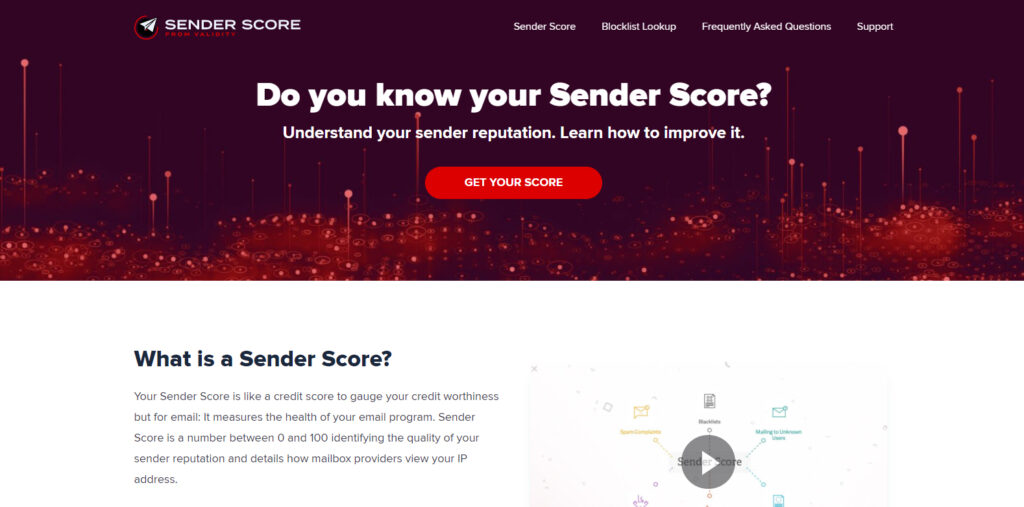
So let’s get right into the steps you can take to improve your domain reputation starting from your next campaign.
- Decrease your email sending frequency. …
- Clean up your Email lists. …
- An Unsubscribe Button. …
- Send Really Good Emails. …
- Catchy Subject Lines. …
- Use Personalization.
Accordingly, How do I improve my Sender Score?
Boost Your Sender Reputation
- Clean your list by regularly removing unengaged contacts.
- Use double opt-in confirmation and/or an email verification tool to prevent misspelled addresses from winding up on your list.
- Never buy contacts – always use lists that are 100% opt-in.
as well, How do I clear my IP reputation? 10 Ways to Improve Your IP Reputation
- Separate your marketing and business transaction email servers.
- Warm up the IP Reputation.
- Check servers for malware infections.
- Review reasons for hosting a public proxy server.
- Set public proxy server policies.
- Implement authentication for proxy servers.
How do you determine if a domain is credible? To determine domain reputation, receivers keep track of ways your domain is used in a message and how that message ends up performing in the inbox. Based on this data, major ISPs use complex algorithms to ultimately “score” your domain, checking that score when scanning future messages to establish a level of trust.
So, How can I improve my email domain authority? I’ve collected 12 of the smartest and most effective techniques for improving email deliverability.
- Prime your IP for success.
- Register a subdomain and use it only for email activity.
- Implement a sender policy framework.
- Check your sender reputation.
- Check feedback loops.
- Stick to a consistent send schedule.
What is a low Sender Score?
This is often called “throttling” or “rate limiting”. For example, the higher the Sender Score, the more messages that IP address can send to that ISP. With a lower Sender Score, attempts to send more messages than are allowed, can mean your messages are rejected (usually as a temporary failure.)
How do I know if my IP is blacklisted?
How to check IP blacklisting. Specify the IP address in the Server IP or Domain field and click Blacklist Check. The mail server IP will be checked against more than 100 blacklists. If your IP address is in the blacklists, you will receive the following message and a list of blacklists.
What is an IP score?
An IP score is a score associated with the sending IP address’s reputation. It helps service providers to assess whether or not your email makes it past the spam filter. Your IP score can change depending on various factors, including receiver complaints and how often you send out emails.
How do I remove my domain from blacklist?
If your site is on a blacklist, sometimes you can contact the list owner and request removal. Most require you to lookup your site first and then provide instructions or a form to ask to be removed.
What is domain name hijacking?
Domain hijacking refers to the wrongful taking of control of a domain name from the rightful name holder. The common use of the term encompasses a number of attacks and incidents. Incidents representative of common forms of attacks are discussed and analyzed in the report.
What is a domain in email?
The primary name in an email address; for example, gmail.com and yahoo.com, as well as the domain names for millions of companies and associations. The domain names used for email servers, websites and all other facilities that transport data over the Internet use the Internet domain addressing system.
How do I find my domain email?
Use the ICANN Lookup tool to find your domain host. Go to lookup.icann.org. In the search field, enter your domain name and click Lookup. In the results page, scroll down to Registrar Information.
What affects domain reputation?
Domain reputation is a lot like the reputation we build as people. It’s affected by what you’ve done in the past and who you’re associated with. Poor-reputation IPs you’ve been associated with or a slip-up sending to the wrong recipient affect how ISPs see you, but there’s always a way to redeem yourself.
How do I improve my domain and IP reputation?
10 Ways to Improve Your IP Reputation
- Separate your marketing and business transaction email servers.
- Warm up the IP Reputation.
- Check servers for malware infections.
- Review reasons for hosting a public proxy server.
- Set public proxy server policies.
- Implement authentication for proxy servers.
Is sender any good?
Sender is the best email provider experience I’ve had over these last 6 years of different providers. Thank you, Sender! I’ve used several email providers over the years. Sender’s free plan is not only the most generous I’ve seen out there, but, their easy to use tools and live support is unparalleled.
Is my domain blacklisted?
To check whether your IP address or Domain is blacklisted, use Site24x7’s blacklist checker – simply key in your IP address or domain name and Site24x7’s blacklist checker tool will verify the given address across the popular 10+ blacklist databases and let you know if your domain or site is blacklisted or not.
Can a website block an IP address?
When a website or a platform wants to limit users’ access, it will block their IP address so they can’t get in even if they change the email address or username. Banning an IP address is a security measure that keeps order on the web, but when it happens to you, it can be frustrating.
Is my domain email blacklisted?
Many blacklists are openly available, such as net. If you want to see whether your domain is being blocked by a specific site, you can search by that site either the IP address or domain. Use a dedicated blacklist tool. You can perform a blacklist check on the MXToolbox.
How is IP score calculated?
How to calculate the Public Interest Score (PIS) of a company or close corporation
- a number of points equal to the average number of employees of the company during the financial year;
- one point for every R1 million (or portion thereof) in third party liability of the company, at the financial year end;
What is a high risk IP?
An IP is categorized as High Risk based on multiple factors including whether the IP origin is from a TOR Network exit node, behind an Anonymous/Elite proxy, has been blacklisted for suspicious/spam activity, or whether the IP origin is in a country that is considered High Risk for fraudulent activity.
What is a suspicious IP address?
What does suspicious IP mean? Simply put, there are ‘good’ IPs and there are ‘suspicious’ IPs. A number of different factors can make an IP suspicious: Sending a lot of spam, being associated with a device that is swarmed with malware, being associated with adware, showing different behaviour patterns and such.
Why do domains get blacklisted?
Domains can get blacklisted if there are too many spam complaints—or if the email appears to share the hallmarks of unsolicited promotion. ISPs may block users from accessing blacklisted websites and may prevent them from receiving an email from blacklisted domains or IP addresses.
What does it mean if your domain is blacklisted?
A Domain Name System Blacklist (DNSBL) is a list that allows internet service providers (ISP) and other website administrators to block emails or traffic from specific systems. It’s usually those that are known for sending spam and other malicious content.
Why is my website blacklisted?
If your website is blacklisted, it’s likely that your website was hacked or flagged for sending out spam mail.